Phishing Sim Production Line
Calibrated multi-vector phishing training, produced at volume.
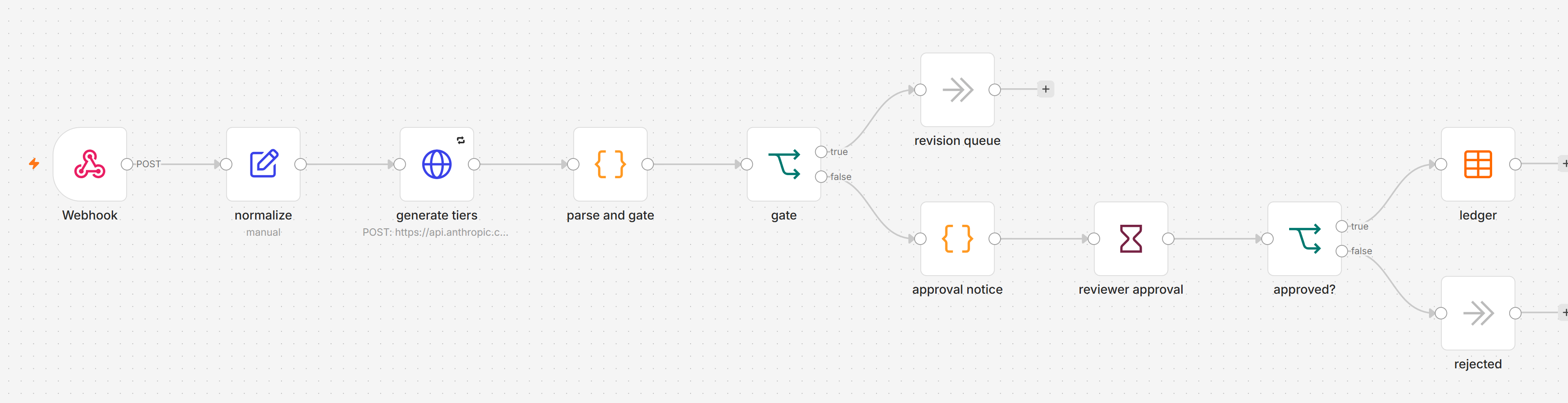
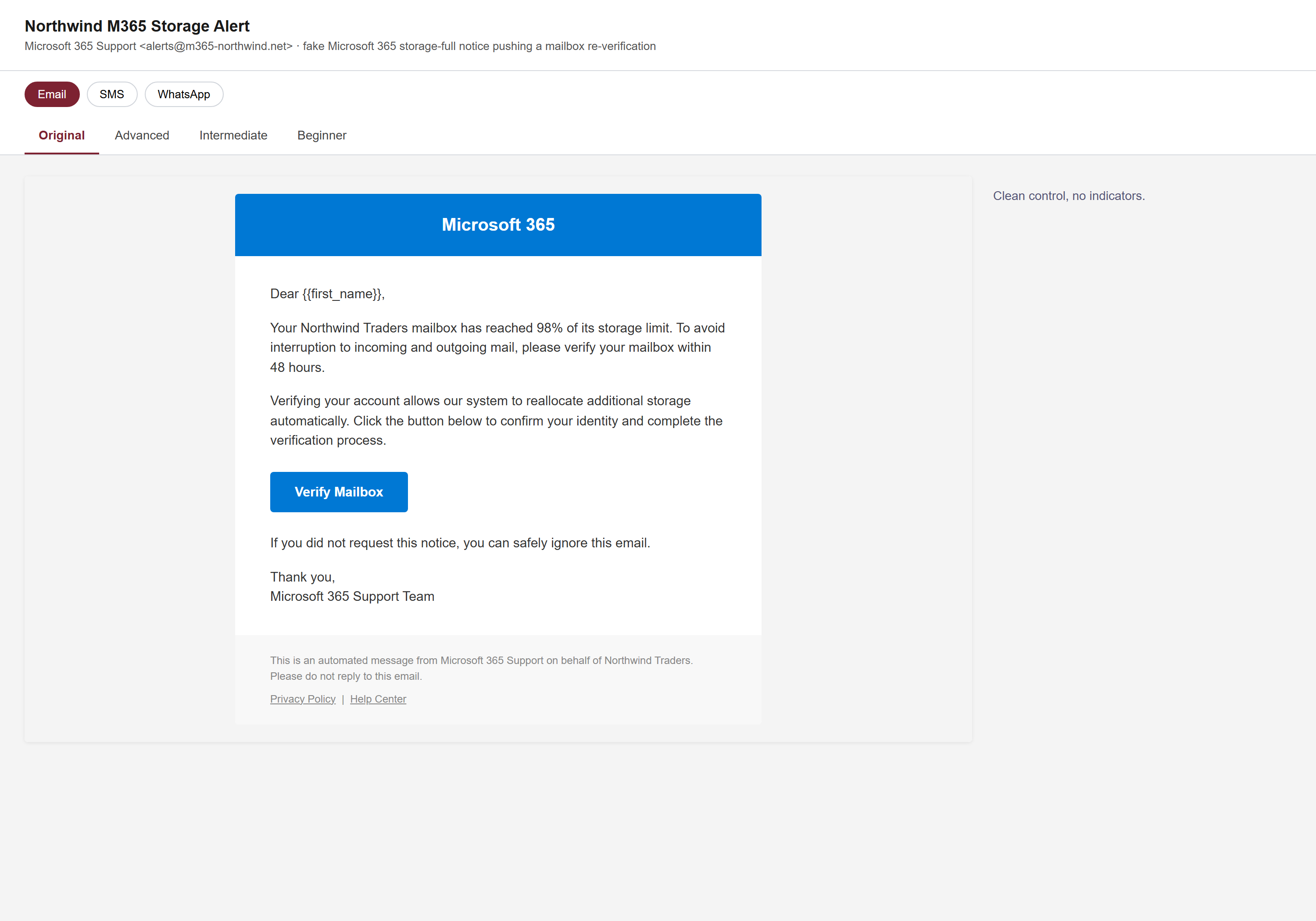
Training sims need exact calibration. An Advanced tier hides one or two tells, Beginner plants five or six, and every flag has to be a real named indicator or the training data is worthless. The design decision that made this reliable: the model returns one clean original plus a per-tier injection plan, and deterministic code materializes all tiers and counts the spans, so token limits and JSON escaping can never corrupt a tier.
Security-awareness teams and MSPs running phishing training across clients and languages.
The content engineer who used to hand-author every sim.
- Brief inA brand, a scenario, and a target tier spread arrive on the webhook.
- Claude writes the originalOne clean phishing email, plus a per-tier injection plan that says which tells to add where.
- Code materializes every tierA deterministic node builds the four email tiers, SMS, and WhatsApp, wrapping each planted flag in a named span.
- The gate counts flagsIt re-checks span counts against the platform rules: 0 / 2 / 4 / 6, correct indicator names only. Wrong count or a blocked indicator is rejected.
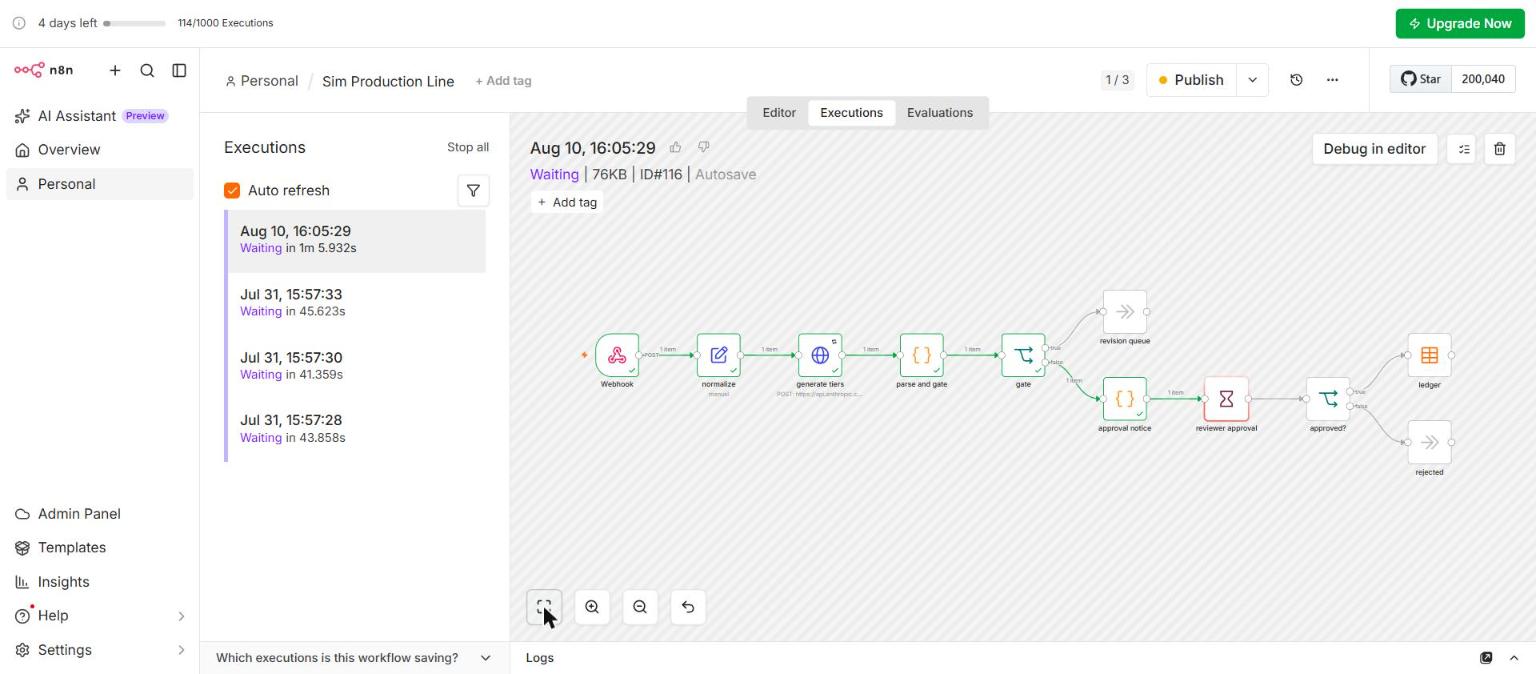
- Human approvesA reviewer sees a tabbed preview of every vector with flags highlighted, and approves or sends back.
- Package outApproved sims export as upload-ready HTML, a landing page, an indicators sheet, and per-vector ZIPs.
The injection-plan design, where the model plans and deterministic code materializes every tier, was the right call: it survived the token-limit and JSON-escape failures that killed the naive four-full-HTMLs version. Next I would add per-locale linguistic QA. The gate checks structure, not idiom, and idiom is where a sim gets clocked by the trainee.