MSP Review & Reputation Engine
Routine reviews get fast drafts. The ones that could hurt someone go to a person first.
Review replies are public and permanent. A reply that admits fault, promises a refund, or names an employee in a dispute creates legal exposure a marketing team cannot take back, and sentiment scores do not catch those cases. The guard here is a code check with a one-way rule: the model can raise an escalation, never lower one.
MSPs and multi-location businesses answering reviews on Google and G2.
The marketing owner who wants drafting handled without inheriting the risk.
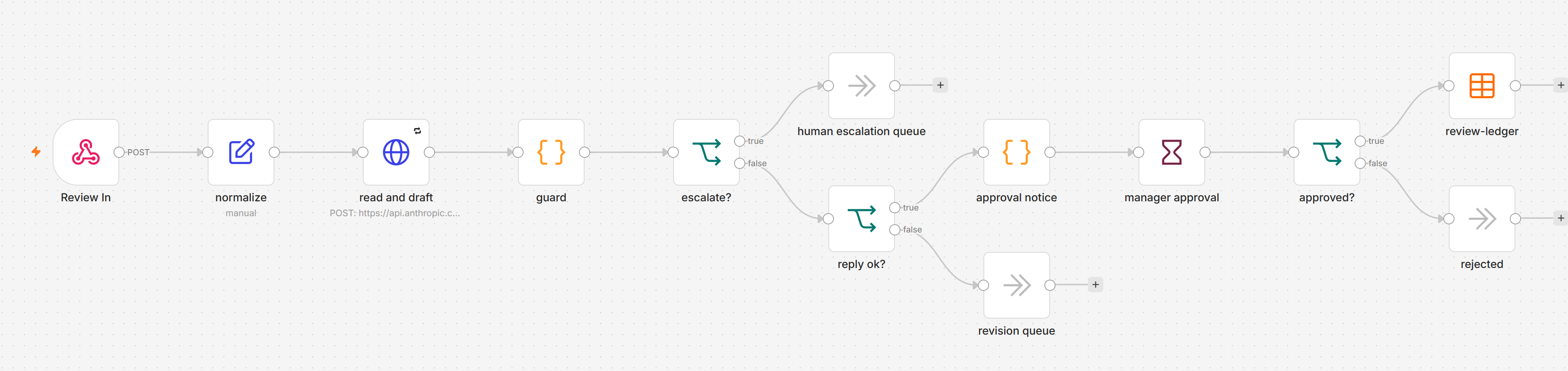
- A review arrivesA webhook catches it and normalizes platform, rating, branch, and text.
- Claude reads and draftsSentiment, themes, and a reply in the brand voice, held to a word cap and a banned-phrase list.
- The guard decides, in codeRating at or below three, any mention of legal action, money, or a breach, or any review naming a staff member forces escalation. The model can raise an escalation, never lower one.
- The reply is checked tooA draft that admits fault, promises money, guarantees anything, or invents a contact detail is sent back for revision rather than queued.
- A person approvesEvery surviving reply waits on a signed approval link. The workflow has no ability to post.
- Everything logsRating, sentiment, whether it escalated and why, the action taken, and who approved it land in a ledger.
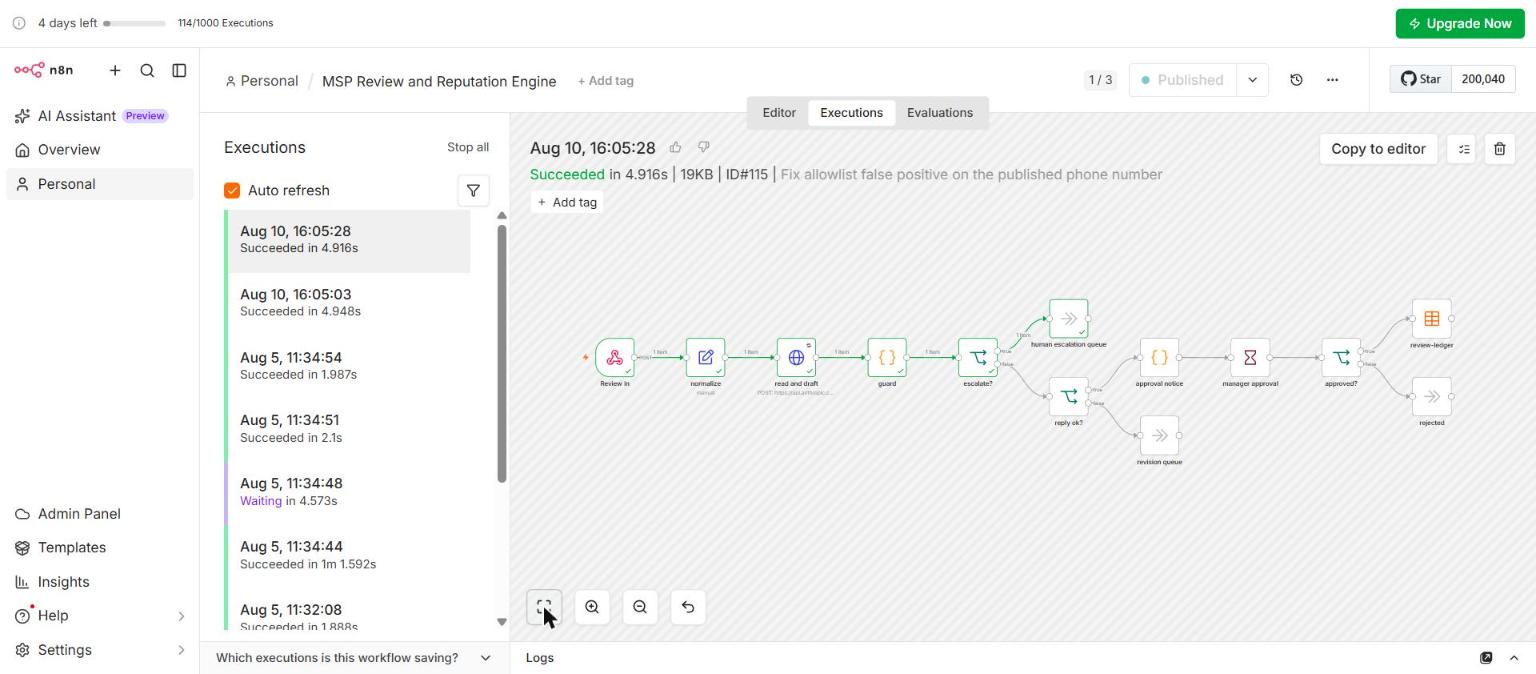
The guard caught its own contact-allowlist bug on the first live run, a phone-number shape match that broke a literal comparison, and that is now a regression test. Next I would add an outcome loop: track which approved replies correlate with rating changes, because a reply engine with no outcome data is half a system.